
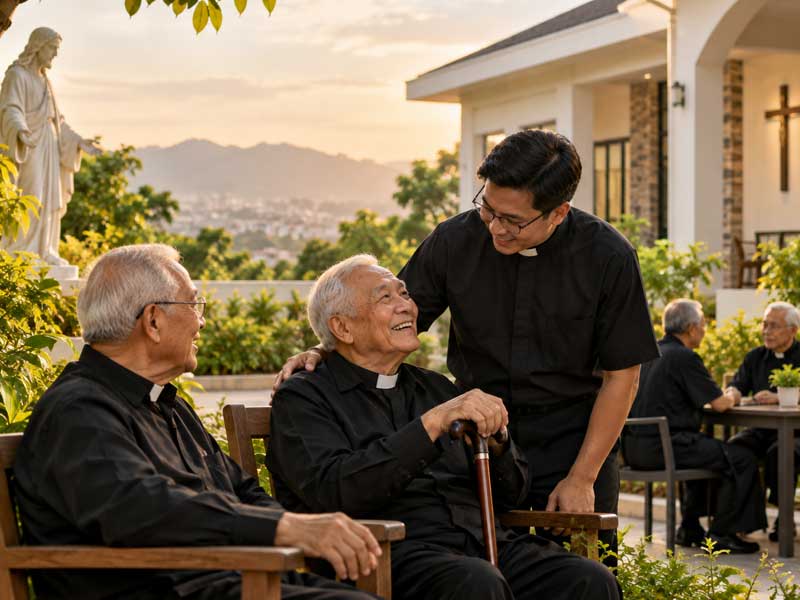
Antipolo Diocese plans a retirement home where elderly priests can live with care, dignity, and companionship after decades of serving their communities
Antipolo, Philippines, 7 September 2026 – After spending decades caring for others, elderly and retired priests of the Diocese of Antipolo will soon have a place designed to care for them.
The Diocese of Antipolo is preparing to build the Residencia Sacerdotal Obispado de Antipolo, a retirement home intended for priests who have devoted much of their lives to serving the Church and local communities. A groundbreaking ceremony is scheduled for September 12.
The planned residence reflects a simple idea: those who have spent years supporting others should also have a place where they can rest, feel valued, and remain connected to their community as they grow older.
Antipolo Bishop Ruperto Cruz Santos described the planned facility as a home of rest, dignity, and fraternity. While details about its design and facilities have not yet been announced, the residence is expected to provide elderly and retired priests with a supportive environment where they can continue their ministry at a gentler pace.
For many priests, retirement does not necessarily mean stepping away from their sense of purpose. Years of pastoral work often leave them with deep connections to the communities they served. Even when they can no longer maintain the demanding schedules of active ministry, their experience, wisdom, and presence can continue to hold value.
The Diocese of Antipolo serves a large Catholic community across Rizal province and Marikina City. It currently has 78 parishes, including three quasi-parishes. This broad network means priests have long played an important role in the daily lives of many communities across the region.
The retirement home is therefore more than a place to live. It represents an effort to recognize the later years of a priest's life as another important stage rather than simply the end of active service.
Growing older can bring changes in health, mobility and independence. Having a dedicated residence can help retired clergy remain surrounded by people who understand their experiences and can provide companionship. It can also offer families, parish communities and fellow clergy reassurance that elderly priests are not left to face retirement alone.
The idea of providing dedicated homes for aging clergy is not entirely new in the Philippines. Other dioceses have also developed residences for retired or elderly priests, reflecting a wider effort to provide care and community for clergy as they age.
The Antipolo project carries a particularly human message. Bishop Santos emphasized that priests have stood alongside people through important moments of life, including baptisms, family celebrations, illness, uncertainty, and times of grief. The planned residence seeks to return some of that care to those who spent their lives offering it to others.
At its heart, the project is about dignity. Retirement should not mean becoming forgotten or disconnected. Instead, it can be a quieter chapter filled with friendship, reflection, and continued purpose.
As the Residencia Sacerdotal Obispado de Antipolo takes shape, its significance may extend beyond the building itself. It sends a simple message about aging and service: a lifetime spent caring for others deserves to be met with care in return.
Latest News
.jpg "A New Community Hub Helps Seniors Navigate Local Healthcare")



Elder Care Outlook Magazine is the definitive source for the latest developments and inspiring stories in the world of elder care. Our mission is to illuminate the extraordinary work being done in care homes and to showcase the innovations that are transforming the way we care for our aging population.
We respect your privacy. The email address you provide will be used solely for subscription purposes and will not be stored or shared.
Subscribe Now
